في بغداد، و في أيام انقطاع التيار الكهربائي و الليالي التي تصبح حالكة، كانت امي تشغل اضوية صغيرة تشحنها مسبقا..اضوية تمنح الغرفة قدرا ضئيلا من النور اثناء انتظارنا عودة الحياة المتقدمة الى مجراها الطبيعي : التلفاز و الانترنت و الماء و كل ما هو بديهي.” كنا نشعر اننا ننتقل في ظرف ساعة من العصر الحديث الى العصر الحجري، و اثناء تواجدنا في العصر الحجري .. كنا و مثل الاسلاف، نبتكر الالعاب انا و هي. واحدة منها كانت اللعب بالظل، حيث تشكل امي بيدها شكلا امام الضوء و تسألني : ما الحيوان الذي يرسمه الظل على الجدار ؟”
تذكرت تلك الليالي حين شاهدت هذا العمل لاول مرة، التجربة و ليس الذكرى فحسب .. اي هذا الذي نفعله لنبتكر شيء من الظلام و القليل من الضوء و شيء مما نعرفه و نخمنه عن العالم.
بالرغم ان الفنان اكتشف الأمر صدفة اثناء العمل، حين سقط شعاع من الشمس على شظية نحاس و تعرف على خط يده في الظل، و ليس بسبب انقطاع التيار الكهربائي في بلجيكا طبعاً.
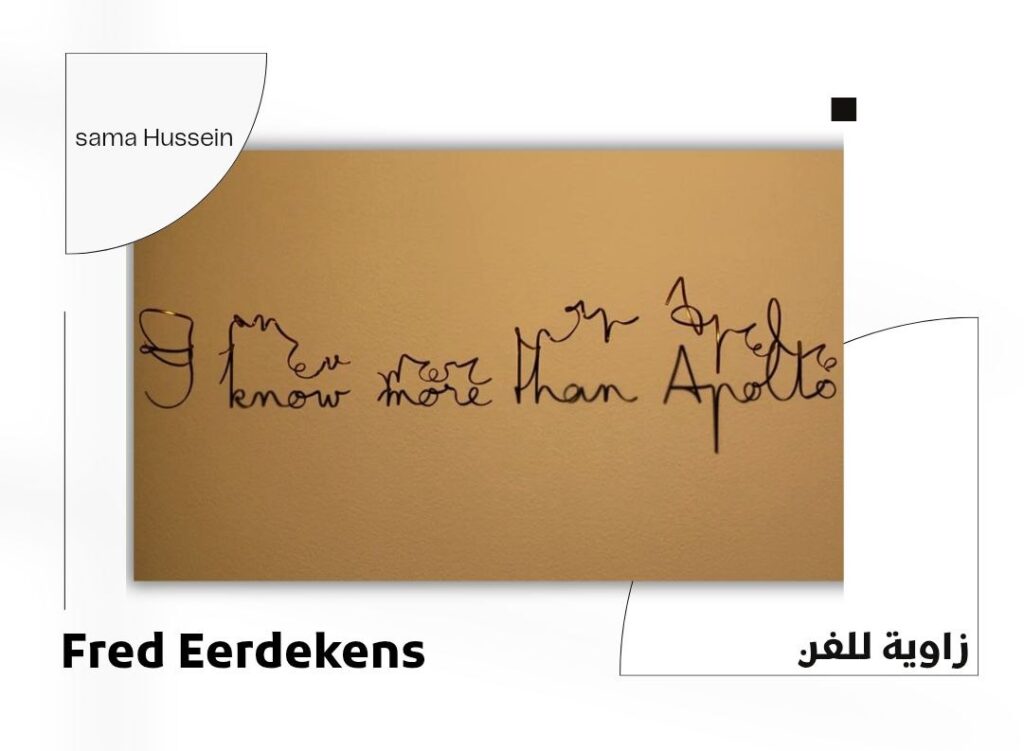
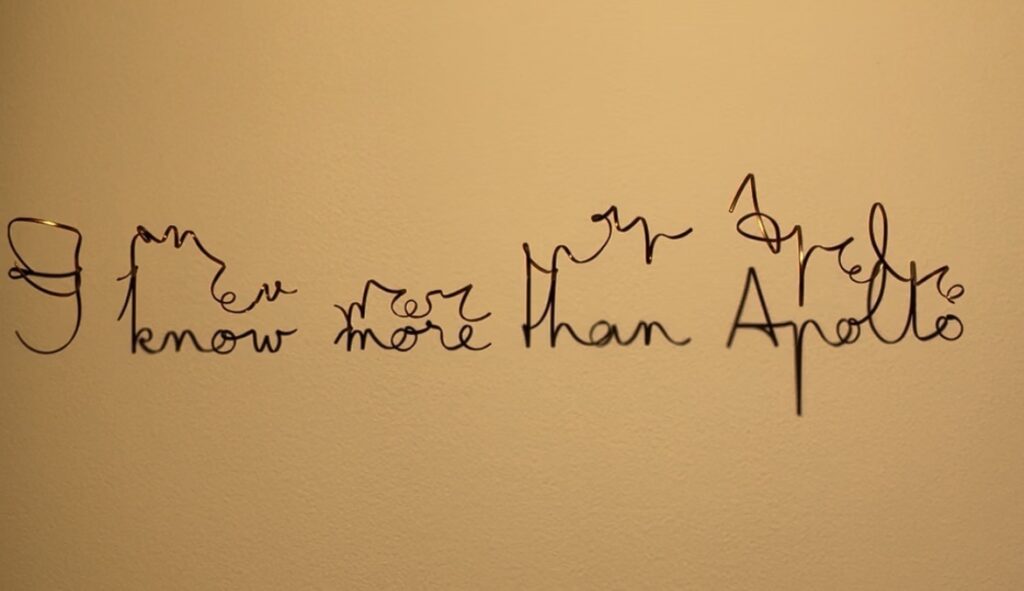
«أعرف أكثر من أبولو. I know more than apollo»
تأتي الجملة التي شكلها فريد في عمله، من أغنية إنجليزية قديمة تُعرف باسم ( Tom o’ Bedlam’s Song)، وهي من النصوص المجهولة المؤلف التي انتشرت في إنجلترا في أواخر القرن السادس عشر وبدايات القرن السابع عشر، ضمن تقليد أغاني «المجانين-Mad Songs» النصوص والأغان التي تتخذ من شخصية المجنون أو المختل أو الهائم صوتًا شعريًا لها..نوع من الحرية لقول اشياء غير مألوفة. و اعتقد هنا ان الجملة لا تمثل المعرفة بقدر تمثل الرؤية.
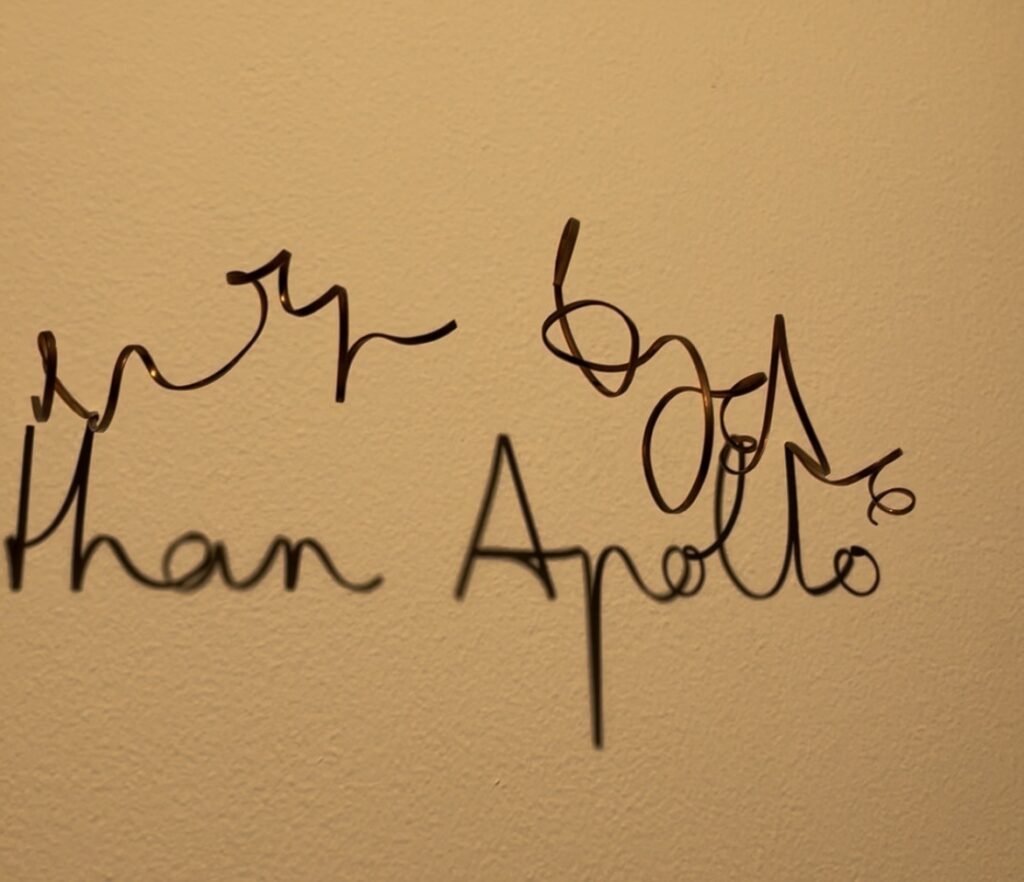
إذا نظرتِ إلى القطعة المعدنية نفسها، قد تبدو ككتلة تجريدية ملتوية من الأسلاك والانحناءات. لكن عندما يسقط الضوء عليها من الزاوية المناسبة، تتحول الظلال إلى كلمات يمكن قراءتها.
هو يضع المعنى في منطقة غير مستقرة لا تستطيع فهمها إلا إذا اجتمعت ظروف معينة؛ الضوء يجب أن يكون في موضعه، وعينك في موضعها، والسلك المعدني كذلك .
و فريد إيرديكينز (Fred Eerdekens) النحات و الفنان البلجيكي، يجعل اللغة من ثوابت اعماله و ممارسته الفنية
ما نعرفه عادة، ان الجسم يصنع الظل و يكون الظل غير مفهوما، لكن فريد يقلب المعادلة في لوحاته بجعل الظل مفهوماً و الجسم لا.
يلوي فريد السلك المعدني، غالبا النحاس، بإشكال غير مفهومة و لا يمكن قراءتها الا اذا انتبهت الى ظلها.. اي, ستقرأ الظل و ليس شكله.
كانت اللوحة شيئاً مألوفاً، منذ الليالي في بغداد..حين لا يكون الضوء كافيا ليعيد لنا العالم الذي انطفأ، لكنه كان كافيا لنلعب انا و امي
Fred Eerdekens, I Know More Than Apollo
Opera Gallery, DIFC, United Arab Emirates — 2025
In Baghdad, during days of power cuts and nights that turned completely dark, my mother would turn on small lights that she had charged beforehand lights that gave the room only a little light while we waited for modern life to return to its normal course: television, the internet, water, and everything that seemed so ordinary
We felt as though, within the span of an hour, we had moved from the modern age to the Stone Age. And while we were in that Stone Age, we, like our ancestors, invented games. One of them was playing with shadows, where my mother would shape something with her hand in front of the light and ask me: What animal does its shadow draw on the wall
I remembered those nights when I first saw this work. Not only the memory, but the experience itself the act of creating something out of darkness and a little light, and out of something we know and something we imagine about the world.
Although the artist discovered this by chance while working, when a ray of sunlight fell on a fragment of copper and he recognised his handwriting in its shadow and not, of course, because of a power cut in Belgium
“I know more than Apollo.”
The sentence Fred shaped in his work comes from an old English song known as Tom o’ Bedlam’s Song. It is an anonymous text that circulated in England in the late sixteenth and early seventeenth centuries, within the tradition of “Mad Songs”—texts and songs that take the madman, the disturbed, or the wanderer as their poetic voice. A kind of freedom to say things that are not familiar
And I think here, the sentence does not represent knowledge as much as it represents vision
If you look at the metal piece itself, it may appear as an abstract mass of twisted wires and curves. But when light falls on it from the right angle, the shadows turn into words that can be read
He places meaning in an unstable space that cannot be understood unless certain conditions come together; the light has to be in the right place, your eye in the right place, and the metal wire as well
Fred Eerdekens, the Belgian sculptor and artist, makes language one of the constants of his work and artistic practice
What we usually know is that the body creates the shadow, and the shadow itself is unintelligible. But Fred reverses the equation in his works, making the shadow intelligible while the object is not
He bends metal wire, often copper, into incomprehensible forms that cannot be read unless you pay attention to their shadow. You read the shadow, not its shape
The work was something familiar, from those nights in Baghdad when the light was not enough to bring back the world that had gone dark, but it was enough for my mother and me to play
Fred Eerdekens, I Know More Than Apollo
Opera Gallery, DIFC, United Arab Emirates — 2025
فوضى المعدن و وضوح الكلمة
Copper, light source